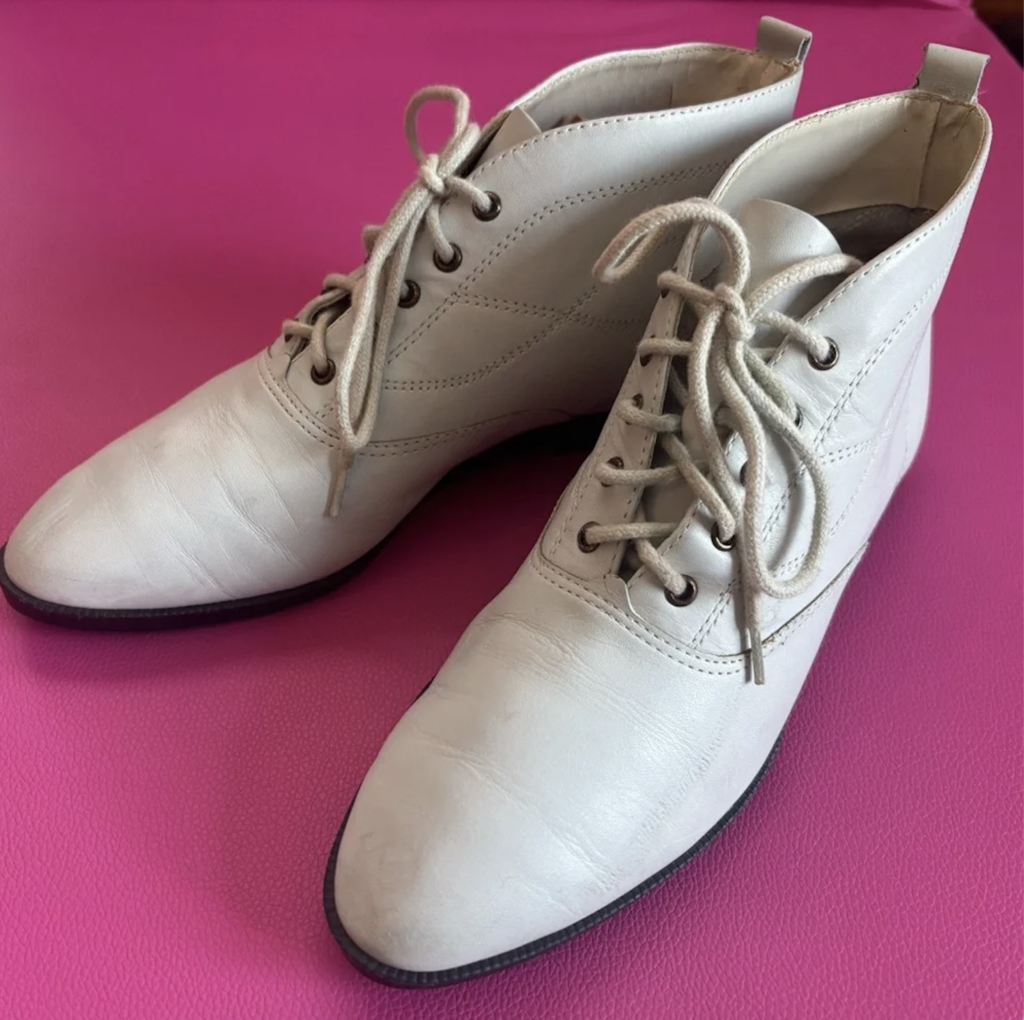
The boots were unforgettable. What I miss most is how we got them.
I still think about my white boots.
Not cowboy boots. Not go-go boots. Not granny booties. I’m talking about the flat faux white leather booties with just enough slouch to make me feel super cool in 1988. I probably found them at Clover or another mall store that every middle-class kid knew by heart. They laced up a little and a pointy toe and zero cushion. I wore them with my pegged acid-washed jeans, acid-washed denim skits, short tiered Debbie Gibson inspired white cotton skirts, oversized sweaters and leggings, and enough Aqua Net to survive a hurricane.
At age ten and eleven, I thought they were about fashion.
Now I think they were about access.
The mall was our gateway to style. Trends started on city streets, in music videos, and on TV, then slowly found their way into the stores where ordinary families could actually afford them. We didn’t click “Buy Now.” We waited. We circled things in the BEST and J.C. Penny catalogs and the Sunday circulars. We looked forward to birthdays. We saved babysitting money or part-time paychecks for the really special things (the white ruffled off-the-shoulder crop inspired by Kelly Kapowski). We counted down to back-to-school shopping because even those of us in Catholic School had a few days — and certainly dances! — that offered us a moment of individuality.
And because we waited, those things mattered.
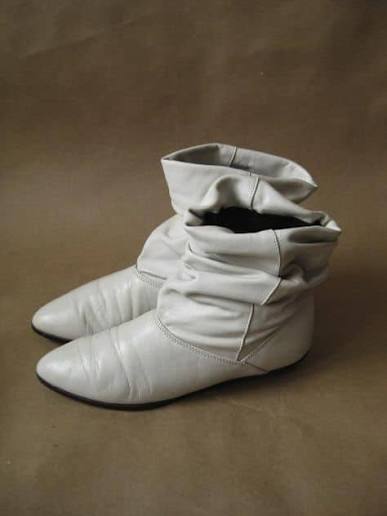
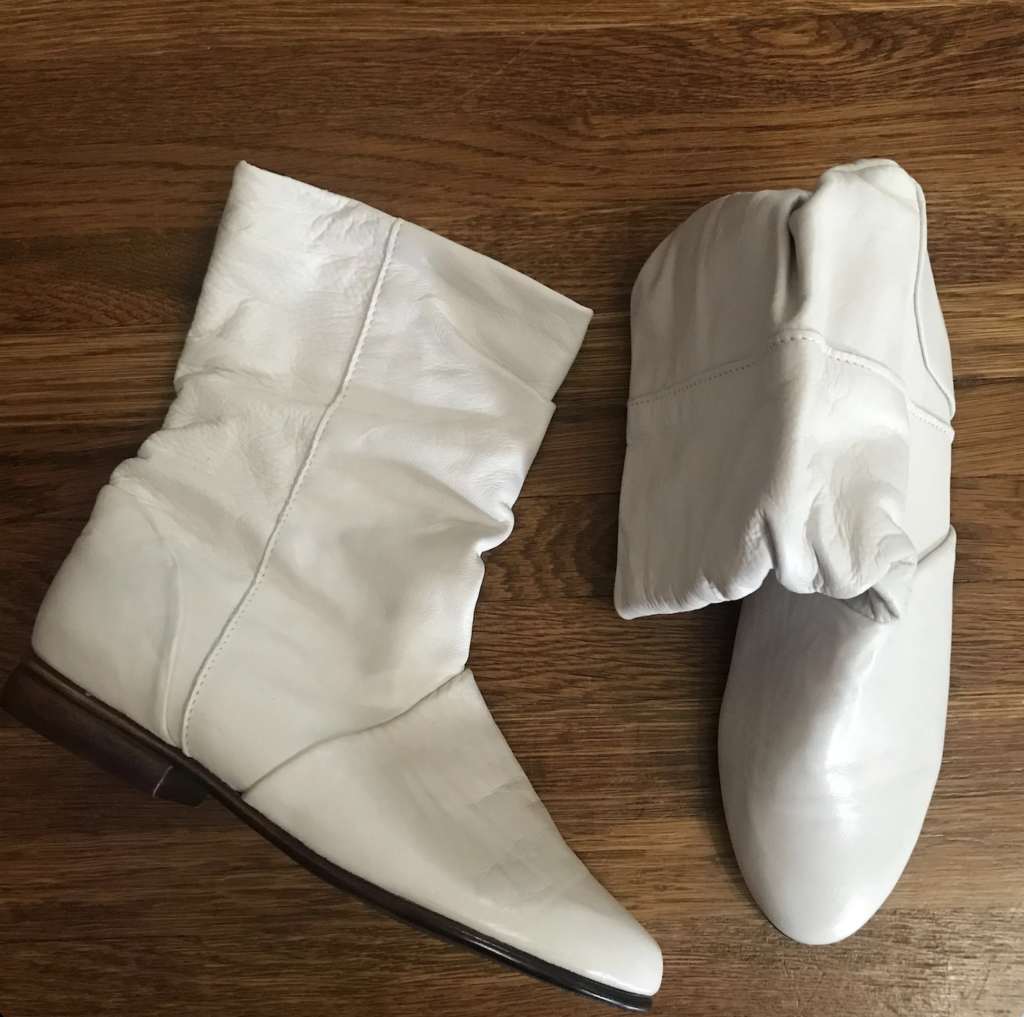
Those boots weren’t just another purchase. They became part of my identity. I wore them until they softened and creased and felt like an extension of who I was. Forty years later, I’m still searching vintage shops for a pair just like them — not because I necessarily need white boots, but because I miss what they represented.
They remind me of a time when belonging felt attainable. When middle-class families had a common gathering place. When fashion traveled from the streets to the mall instead of arriving by way of an overly made-up 20-something influencer or on our doorstep overnight. When self-expression and belonging were the goals, anticipation was part of the experience, and ownership carried a different kind of gratitude.
I can’t help but wonder if the waiting was part of the belonging. Maybe access wasn’t just about finally getting the boots. Maybe it was about knowing we were all waiting together.
 English